Usage of the Underscore(_) in Python?
Usage of underscore in Python

This is a continued story of my previous post Star in Python.
In this article, we will know about the usage of underscore in Python.
As a placeholder of variable
If you do not use a variable then you can name it as underscore.
>>> my_dict = {'a': 1, 'b': 2}
>>> for k, _ in my_dict.items():
...    print(f"The keys are: {k}")
The keys are: a
The keys are: b
Here we have not used the values of the dictionary therefore no need to assign that to a named variable, underscore we have used to denote the values of the dictionary. This is a best practice.
Although this is not such an excellent example, hope you got the point.
In object-oriented programming
Underscore plays a significant part in OOP.
Private method
To define a private method _ prefix is used.
>>> class myClass:
...    def _my_private_method(self):
...    pass
Protected method
>>> class myClass:
...    def __my_protected_method(self):
...    pass
Dunder method
To define in-built under methods
>>> class myClass:
...    def __init__(self):
...    pass
Variable name delimiter
Under PEP8 guideline variable names should be delimited with underscores.
Access last executed result in command prompt
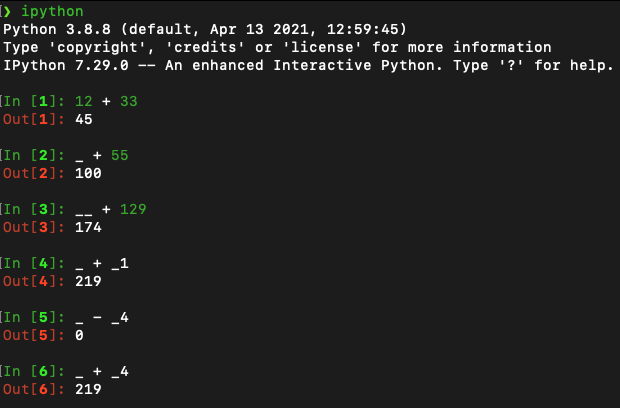
In the terminal or command prompt to access the last output of the operation you can use the underscore.
>>> 4 + 3
7
>>> _
7
ipython takes it to the next level with number-based access.
Separate digits for readability
>>> 1_00_000
100000
>>> 3_25_50_000 == 32550000
True
Photo by the author.


